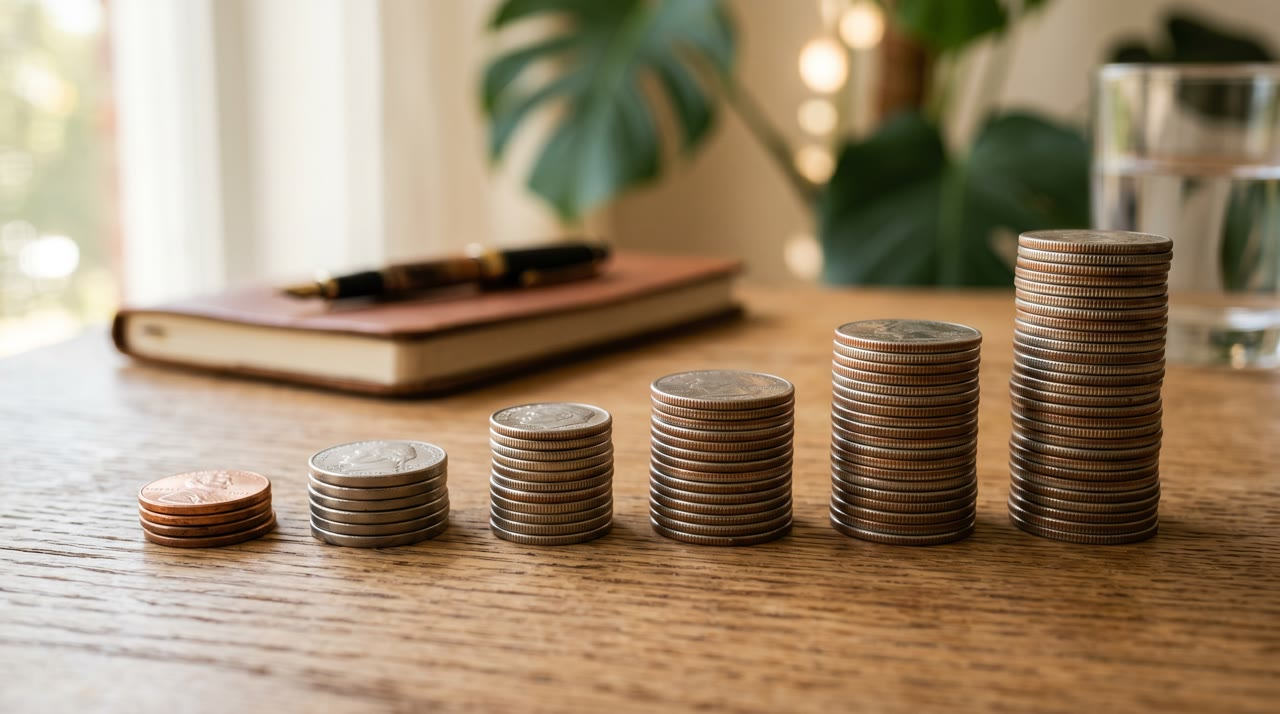
Compound interest is interest earning interest. It is the single most important force in building wealth, and the reason starting early beats saving more later.
When your returns get reinvested, each year you earn a return not just on your original money but on all the gains it has already produced. That snowball starts slowly and then accelerates. To project your own numbers, use the free future value calculator.
The formula
Future value combines a lump sum compounding on its own with a stream of contributions that each compound for the time they stay invested:
FV = PV(1 + r)^n + PMT x [((1 + r)^n - 1) / r]PV is your starting principal, PMT each regular contribution, r the periodic return, and n the number of periods. The interest-on-interest term is what makes the curve bend upward over time.
Time is the biggest lever
Investing $500 a month at a 7% average annual return shows how dramatically time changes the outcome. The money you contribute grows linearly, but the total grows exponentially.
| Time invested | You contribute | Ends up worth |
|---|---|---|
| 10 years | $60,000 | ~$86,500 |
| 20 years | $120,000 | ~$260,000 |
| 30 years | $180,000 | ~$610,000 |
Doubling the time from 15 to 30 years far more than doubles the result. The last decade adds more dollars than the first two combined, because that is when the largest balance is compounding. (Figures are nominal, before inflation.)
The rule of 72
A quick mental shortcut: divide 72 by your annual return to estimate how many years it takes your money to double. At 7% that is about 10 years; at 9%, about 8. It is a handy way to sanity-check the power of a higher return or a longer horizon without reaching for a calculator.
How to put it to work
- Start as early as you can; years in the market matter more than the amount.
- Automate contributions so they compound without you thinking about it.
- Use tax-advantaged accounts (401(k), IRA, HSA) so the growth is not eroded by taxes each year.
- Reinvest dividends and interest rather than spending them, so the snowball keeps rolling.
See exactly what your plan grows to with the future value calculator, or project income from a dividend portfolio with the dividend calculator.