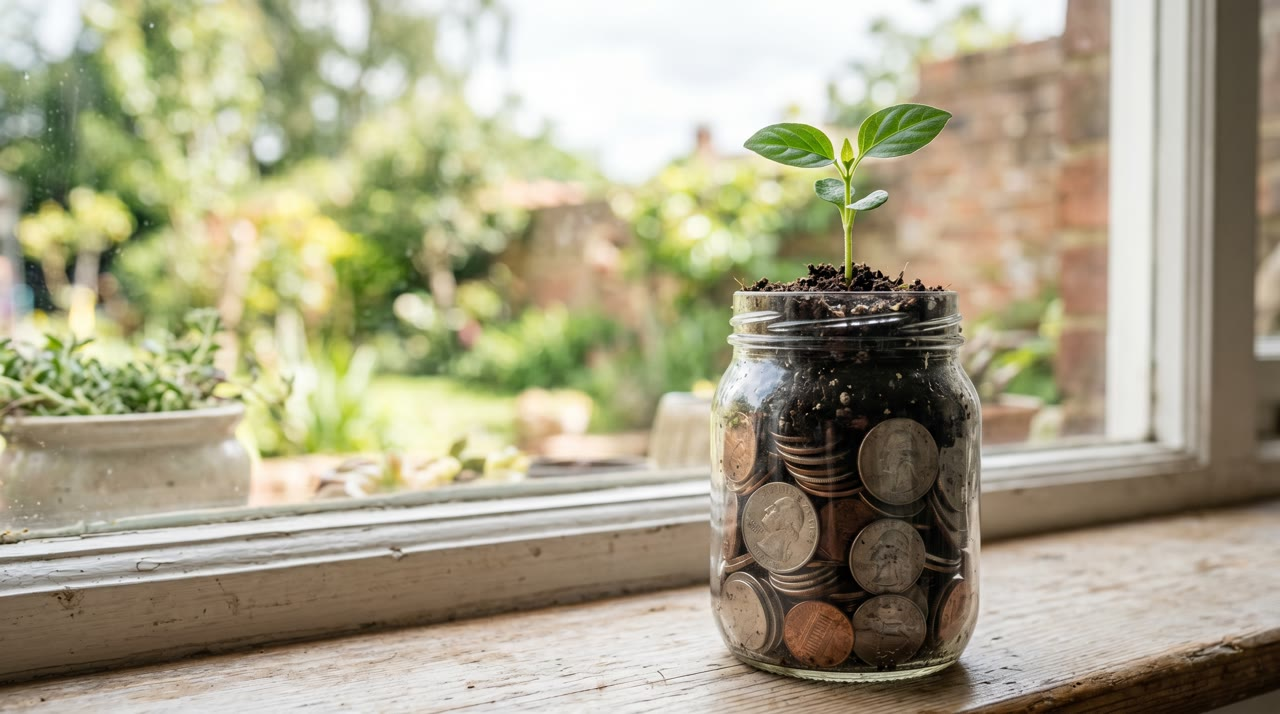
A DRIP, or dividend reinvestment plan, automatically uses your dividends to buy more shares instead of paying you cash, and that small loop compounds into a surprisingly large difference over decades.
Each reinvested dividend buys fractional shares, those shares pay their own dividends, and the cycle repeats. To see the gap between reinvesting and taking cash on your own numbers, use the free dividend calculator.
How DRIP compounds
Three forces grow a dividend portfolio: the dividend per share rising each year, the share price appreciating, and reinvestment increasing your share count. The first two happen whether or not you reinvest. The third is the one you control, and it is where DRIP earns its reputation.
Suppose you own shares yielding 3%. Take the dividends as cash and your share count never changes, so your income only grows as the company raises its dividend. Reinvest instead and your share count climbs every quarter, so next year's dividend is paid on more shares, which buys still more shares. Over 20 to 30 years the reinvested portfolio can end up worth far more, with a much larger income stream, than the identical portfolio that paid cash.
Yield on cost
A useful way to see the payoff is yield on cost: your current annual dividend divided by what you originally paid. A stock bought at a 3% yield that grows its dividend 7% a year is paying roughly 6% on your original cost after a decade, and more after two. Reinvesting accelerates that climb because you keep adding shares at various prices along the way.
When DRIP makes sense (and when it doesn't)
- Accumulating: if you don't need the income yet, reinvesting is usually the most efficient choice.
- Living on dividends: in retirement you may switch DRIP off and take the cash to spend.
- Rebalancing: automatic reinvestment buys more of what you already own, which can skew your allocation over time.
- Taxes: in a taxable account, reinvested dividends are still taxed the year they are paid, so set cash aside for the bill.
A note on chasing yield
A very high headline yield (above roughly 6% to 7%) often signals a stock under stress, and a dividend cut wipes out the compounding you were counting on. Sustainable dividend growers usually start with a lower yield but raise it reliably. Model both the yield and the growth rate in the dividend calculator to see which combination actually builds more income.